
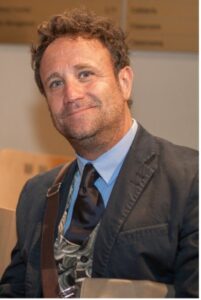
In international law, strength is often measured by victories, credentials, and high-profile cases. For Charlie Victor Lamento, J.D., however, strength takes on a quieter, more complex form, shaped by unseen pressures, ethical dilemmas, and the weight of pursuing justice across borders. This conversation explores the resilience behind the role, the personal cost of advocacy, and what it truly means to uphold human rights when no one is watching.
An accomplished international human rights lawyer, former criminal prosecutor, and international law professor, he is deeply committed to legislative lawyering and the cultivation of values-based leadership. His work focuses on public policy training and education that reinforces the rule of law, protects human rights, and advances peacebuilding. He has also served as a Permanent Representative to the United Nations in New York, Geneva, and Vienna.
Have you ever questioned your path in international law? What kept you moving forward?
Yes, more times than I can count. There have been nights when the weight of endless diplomatic stalemates and the sheer scale of human trafficking felt insurmountable. I questioned whether our law-enforcement anti-trafficking training and the public policies we’ve been fighting for could ever outpace the predators who operate faster than any bureaucracy. What kept me moving forward were the faces of the many children I have met along this journey. I can imagine now that many victims today are crying out, asking, “Is anyone coming to rescue them?” This question has become my North Star. Every time doubt creeps in, I remember that children cannot wait for perfect systems. They need us to keep showing up, imperfect as we are.
When people look at your career, they see experience and authority—but what’s a moment where your strength wasn’t visible, yet it carried you through?
When people look at my career—as an accomplished international human rights lawyer, former criminal prosecutor, and founding director of Global Hope Network Intl.’s Criminal Law Policy & Training Centre in Geneva, Switzerland, while serving as GHNI’s Chief Representative to the United Nations—they see experience and authority. What they often don’t see is the strength that has carried me through moments when I felt anything but strong. There have been nights, more times than I can count, when the weight of endless diplomatic stalemates and the sheer scale of modern slavery felt insurmountable. I have questioned whether our law-enforcement anti-trafficking training and the public policies we’ve fought so hard for could ever outpace the predators who operate faster than any bureaucracy. In those dark moments, my visible strength faltered. What carried me forward was something quieter and deeper: my Christian faith and the faces of the many children I have met along this journey. That persistent, often invisible commitment to them is what has sustained me through every doubt.
In your experience, where do you see the greatest gap between written law and real justice?
The greatest gap exists in the space between the ratification of anti-trafficking legislation and enforcement. We have robust international instruments—the Palermo Protocol, the Optional Protocol on the Sale of Children, the UN Convention on the Rights of the Child— yet in too many jurisdictions, these remain ink on paper. Corruption, poverty, and political will turn borders into sieves while victims fall through the cracks. Real justice requires not just laws, but the political courage and resources to prosecute and convict the traffickers— the demand side—the buyers and the facilitators—who rarely face the same scrutiny as the low-level traffickers. Until we close that enforcement gap, “justice” remains aspirational for the most vulnerable.
Have you ever faced a case that challenged you morally? How did you navigate that tension?
While every case tests my ethics, cases involving traffickers who were themselves victims of trafficking and grooming are especially complex. As a former criminal prosecutor, I know that the law requires accountability, I therefore advocated for a model international standard at the United Nations to prove post-traumatic stress syndrome, so the justice system could lessen responsibility for traffickers who were ounce trafficking victims. I reminded myself—and the team—that mercy without justice is abandonment, and justice without mercy is cruelty. The tension never fully disappears; it is the daily price of this work. I hold it by anchoring every decision in the principle that protecting the innocent must never become vengeance.
Working across different legal systems, what is one truth about justice that has remained constant?
Justice, at its core, is always personal before it is institutional. Whether I am in a common law courtroom in the United States, a civil-law tribunal in Europe, or customary systems in parts of Africa and Asia, the constant is the survivor’s need to be seen, heard, and believed. Laws differ, procedures differ, but the human cry for dignity and safety does not. That truth keeps me grounded when systems clash: we are not merely harmonising statutes—we are restoring stolen humanity.
Can you share a failure that shaped you more than any success?
Early in my career, I pushed aggressively for a high-profile enforcement of the existing criminal laws without first building the quiet coalitions needed on the ground. As implementation collapsed because local NGOs and survivor networks felt side-lined. Watching protective legislation gather dust while children remained at risk taught me that advocacy without humility is performative. That failure reshaped my entire methodology: I now begin every initiative by sitting in the back of the room, listening first. The lesson was painful, but it became the foundation for more sustainable, survivor-centred work that actually endures.
Your work exposes you to complex and often difficult realities—how do you stay grounded?
I stay grounded through three non-negotiables: faith, family, and fierce boundaries. My Christian faith reminds me that I am not the saviour—only a servant in a much larger story. My faith is my anchor – while maintaining strict boundaries—that trafficking cannot touch. The work will take everything you let it take; grounding is an act of deliberate resistance.
What does integrity mean to you when it comes at a personal or professional cost?
Integrity, to me, is choosing truth over compromise. It has meant walking away from funding sources or speaking engagements with organizations who promote policies that are not best for the victims. It has meant publicly criticizing allies when they softened language around child sexual exploitation to protect diplomatic relationships. The cost is real—lost invitations, strained partnerships, personal exhaustion—but the alternative is becoming part of the machinery that fails children. Integrity is non-negotiable because the children we serve have already had every other promise broken.
What internal struggles do professionals in your field face that people rarely see?
The unseen struggle is the constant tension between hope and hopelessness. We carry many stories of unimaginable cruelty, yet we must show up to meetings smiling and persuasive. Including questioning from time to time whether our efforts are making a real positive impact on eliminating human trafficking. We rarely speak of it because the world needs us to be strong; admitting the toll can feel like betraying the cause. Yet the most effective advocates I know are those who have learned to name the darkness without letting it define them.
If your work were to leave one lasting impact, what would you want it to be?
I want my work to leave a world where no child ever has to ask, “Why didn’t anyone come for me?” If the training we delivered, and the policies we fought for at the United Nations, and the survivor networks we built result in even one less child being sold, one less family shattered, then the unseen hours and personal costs will have been worth it. Ultimately, I want my legacy to be measured not in headlines or credentials, but in the laughter of children who grew up free—because someone refused to look away.